

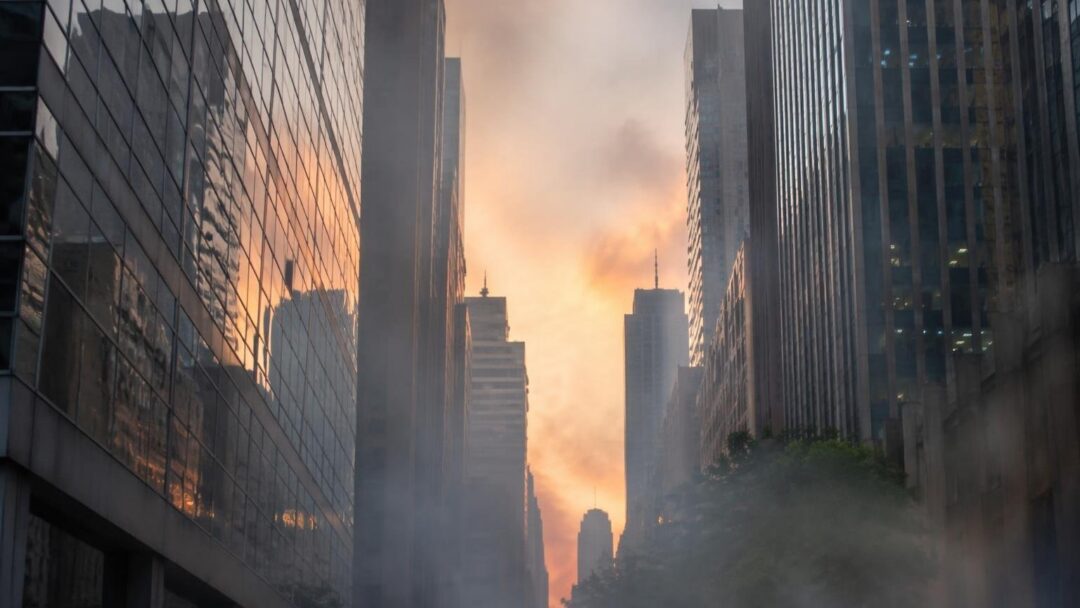
Wildfire smoke is a growing concern for urban areas, with cities like New York experiencing poor air quality due to particulate matter from distant fires. The Air Quality Index (AQI) is a measure of the level of air pollution, with higher numbers indicating worse air quality. Generally, an AQI above 100 is considered unhealthy for sensitive groups, while an AQI above 200 is unhealthy for everyone.
The main culprit behind poor air quality from wildfires is PM2.5 or particulate matter 2.5 micrometers or smaller. These tiny particles can penetrate deep into the lungs, causing respiratory problems and other health issues. Typically, PM2.5 levels are highest near the source of the fire, but wind patterns can carry the smoke hundreds of miles, affecting urban areas far from the fire.
How Smoke Travels To Urban Areas
Smoke from wildfires can travel long distances, carried by wind currents and atmospheric conditions. In most cases, the smoke will follow the path of least resistance, which can include valleys and low-lying areas. As the smoke travels, it can accumulate in urban areas, causing poor air quality and health problems for residents.
Reducing Exposure To Wildfire Smoke
There are several ways to reduce exposure to wildfire smoke, including wearing masks and staying indoors. Generally, N95 masks are the most effective at filtering out PM2.5 particles, but they can be uncomfortable to wear for long periods. Typically, surgical masks are less effective, but still offer some protection. In most cases, staying indoors with air filtration systems can be an effective way to reduce exposure to wildfire smoke.
Indoor Filtration Methods
There are several types of indoor air filtration systems that can help reduce exposure to wildfire smoke. Typically, HEPA filters are the most effective, capturing 99.97% of particles as small as 0.3 micrometers. Generally, activated carbon filters can also be effective, but may not capture as many particles as HEPA filters.
Guidance For Vulnerable Groups
Certain groups, such as children and seniors are more vulnerable to the health effects of wildfire smoke. In most cases, these groups should take extra precautions to avoid exposure, including staying indoors and wearing masks when outdoors. Typically, outdoor workers should also take precautions, including wearing masks and taking regular breaks in well-ventilated areas.


